
Spring scramble
How we prepare our fields for veggies

We have an important annual ritual at the end of spring transplanting. Over beers, and sometimes takeout sushi, Nina and I discuss what we’ll do differently next year. We commit to staying in better shape over the winter so that spring hurts less. We schedule time in the fall to remineralize our beds so we don’t have to do that work in the spring. We acknowledge that we’ve failed to follow through on any of these aspirations in the past, but promise ourselves that next year will be different.
We spend about an hour on every bed we prepare for planting in the spring. We’re currently planting in 35 of them, so it’s a lot of work! You can see all the steps involved in the image below.
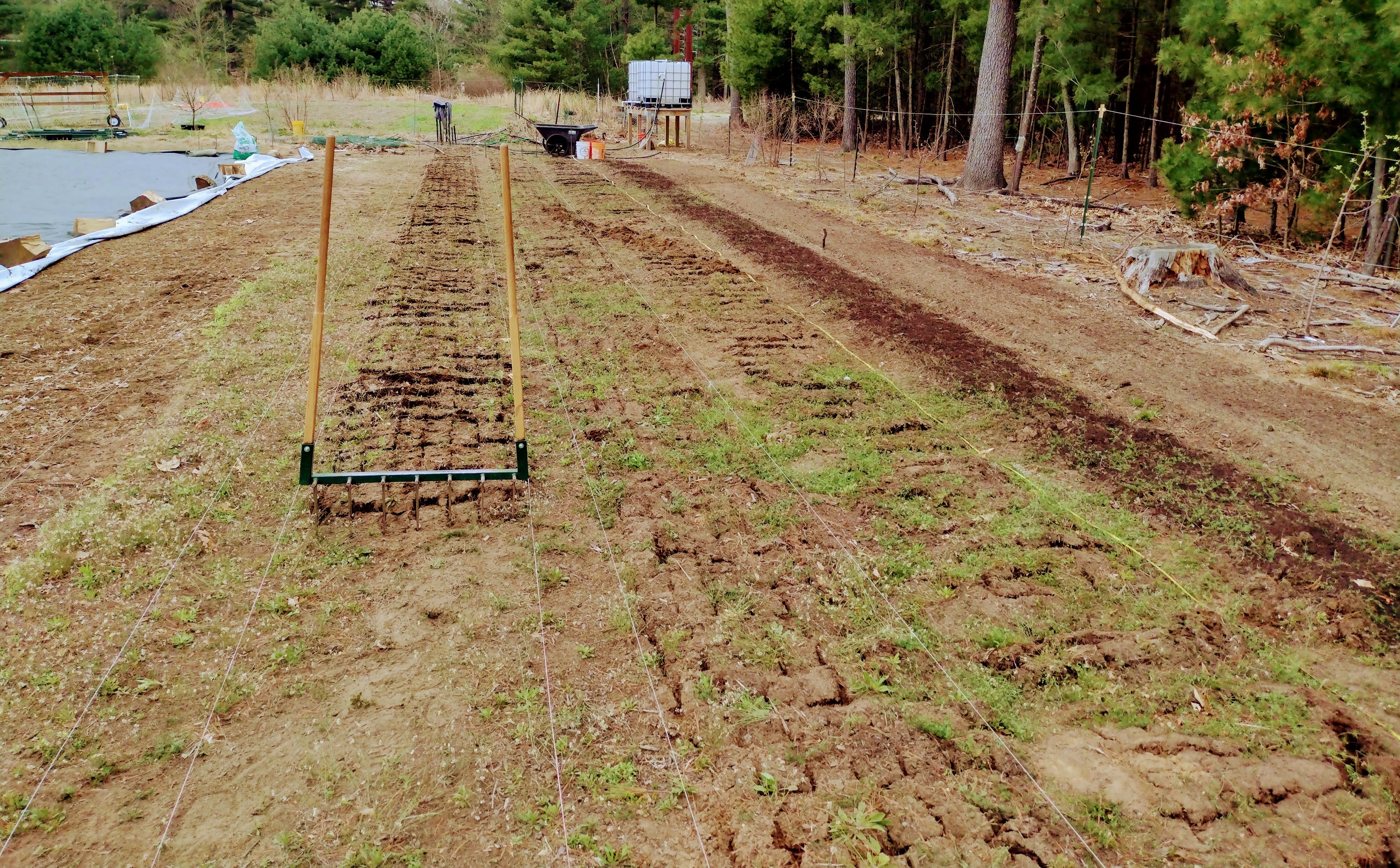
Step one, when we manage to time it right, is to spread a black silage tarp over the beds and weigh it down with sandbags, firewood, rocks, and whatever else we can find that probably won’t tear it and will prevent it from becoming a giant sail and blowing away. After three weeks, all cover crops and weeds on the ground have died and have started to rot, making them easier to incorporate into the soil. Here you can see the completely brown strip on the left where the tarp has been pulled back, and the weedy patch we failed to tarp taking up most of the frame.
Our fields have permanent stakes marking 23 beds in each, and we next run mason twine around these stakes to mark out a set of beds to work on. We then begin the unpleasant but necessary task of deeply aerating and decompacting the subsoil using a terrifying medieval weapon called a broadfork. We shove its very sharp steel tines over a foot into the ground and pull back on the handles, lifting a clod of earth up until it starts to crack. We thereby supply oxygen for soil fauna without inverting the soil layers, which would bring low-nutrient sand and weed seeds up to the surface. In the photo, we’ve completed forking two beds and are nearly done with a third.
Based on the results of a fall soil test, we mix a very precise organic fertilizer targeting our field’s actual nutrient deficiencies and cut this blend in a cement mixer with biochar and manure compost until we have 20 gallons of evenly distributed material. We then sprinkle a five-gallon bucket of this stuff over each quarter of each bed. In the photo, this is the dark brown stripe on the second bed from the right. We incorporate it six inches into the soil using the power harrow attachment for our BCS two-wheeled tractor.
Finally, we work nitrogen fertilizer (feather meal on our farm) into the top two inches of the bed and are ready to plant. The final bed on the right has been planted to carrots, so now we wait. By wait, of course, I mean frantically prep 28 more beds for the 2,000 seedlings we have to get into the ground in the next three weeks…